
Operators
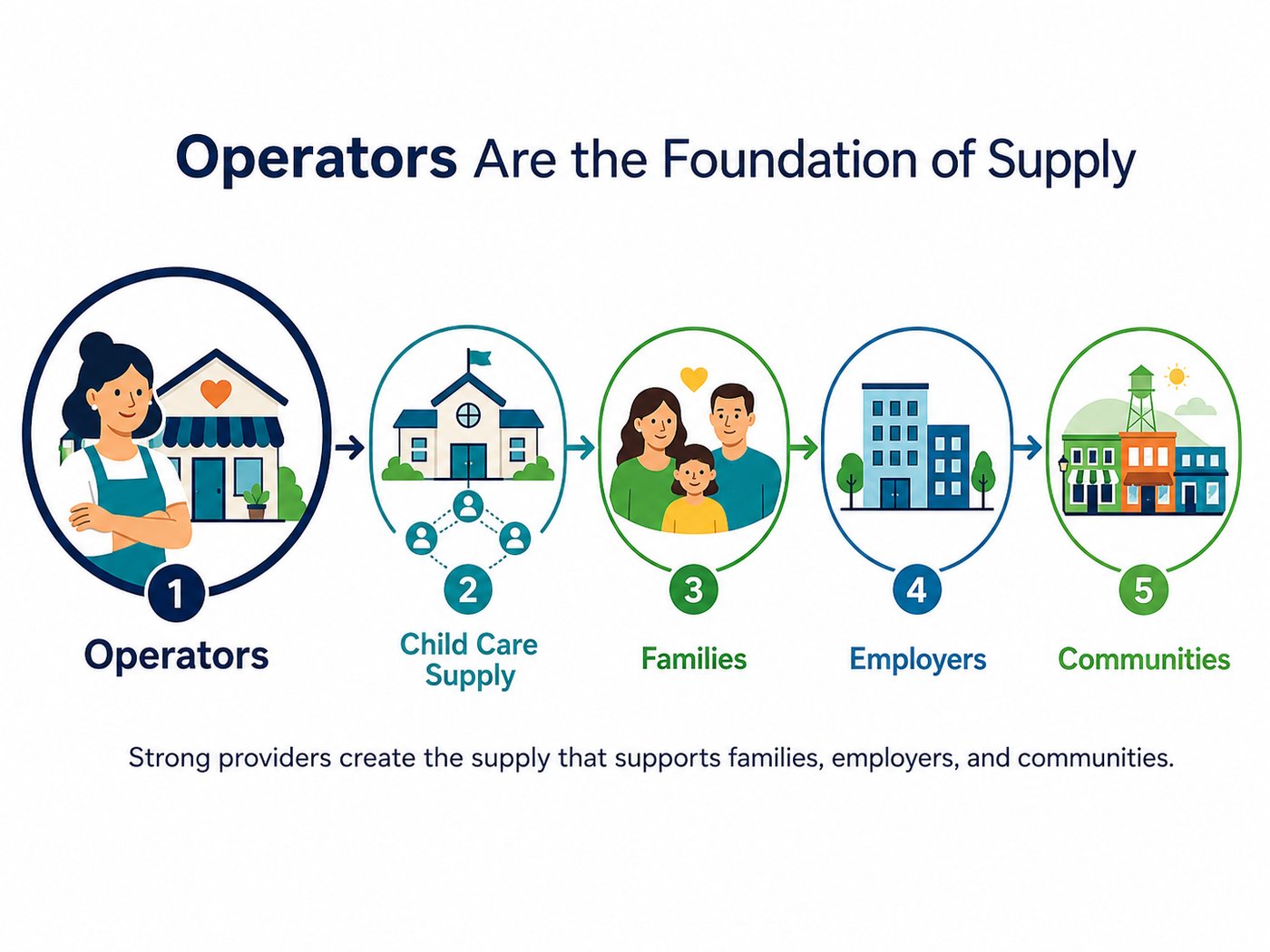
Child care operators are essential Main Street businesses. They create the local child care supply that families, employers, and communities depend on.
Main Street Child Care
Child care supply starts with operators. Main Street Child Care helps communities understand child care as essential infrastructure, recognize fragmentation as the barrier to local supply, and build the operating capacity needed to support operators, families, employers, and Main Street economies.
When child care works, Main Street works.




Child care operators are essential Main Street businesses. They create the local child care supply that families, employers, and communities depend on.
Families can work, build income, and participate in community life when reliable child care supply exists.
Employers benefit when child care supply supports attendance, retention, recruitment, and workforce reliability.
Communities grow stronger when operators are supported and local supply is organized, sustainable, and connected to economic development.
What you can explore here
Share what child care supply looks like in your community.
Take the PulseFollow the national conversation and see how communities are naming the issue.
Join the ConversationSee how child care supply challenges show up in different community conditions.
Explore ProfilesRead practical ideas and field learning from Business of Child Care.
Read InsightsConnect with us about what your community is seeing.
Contact UsInfrastructure framing
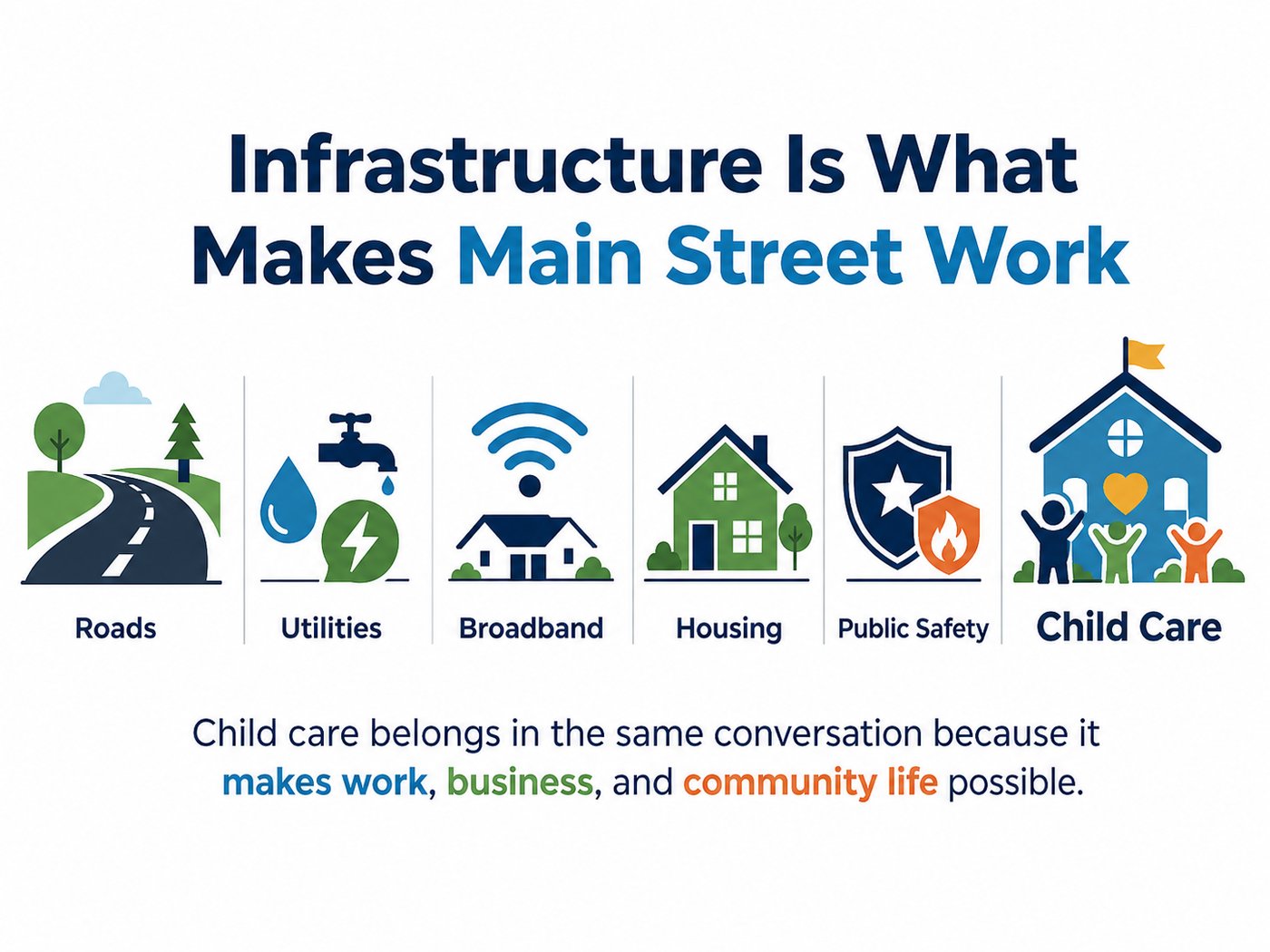
Every child care slot depends on a provider, a business model, a facility, a workforce, licensing, enrollment, funding, and community conditions that make operation possible.
Fragmentation
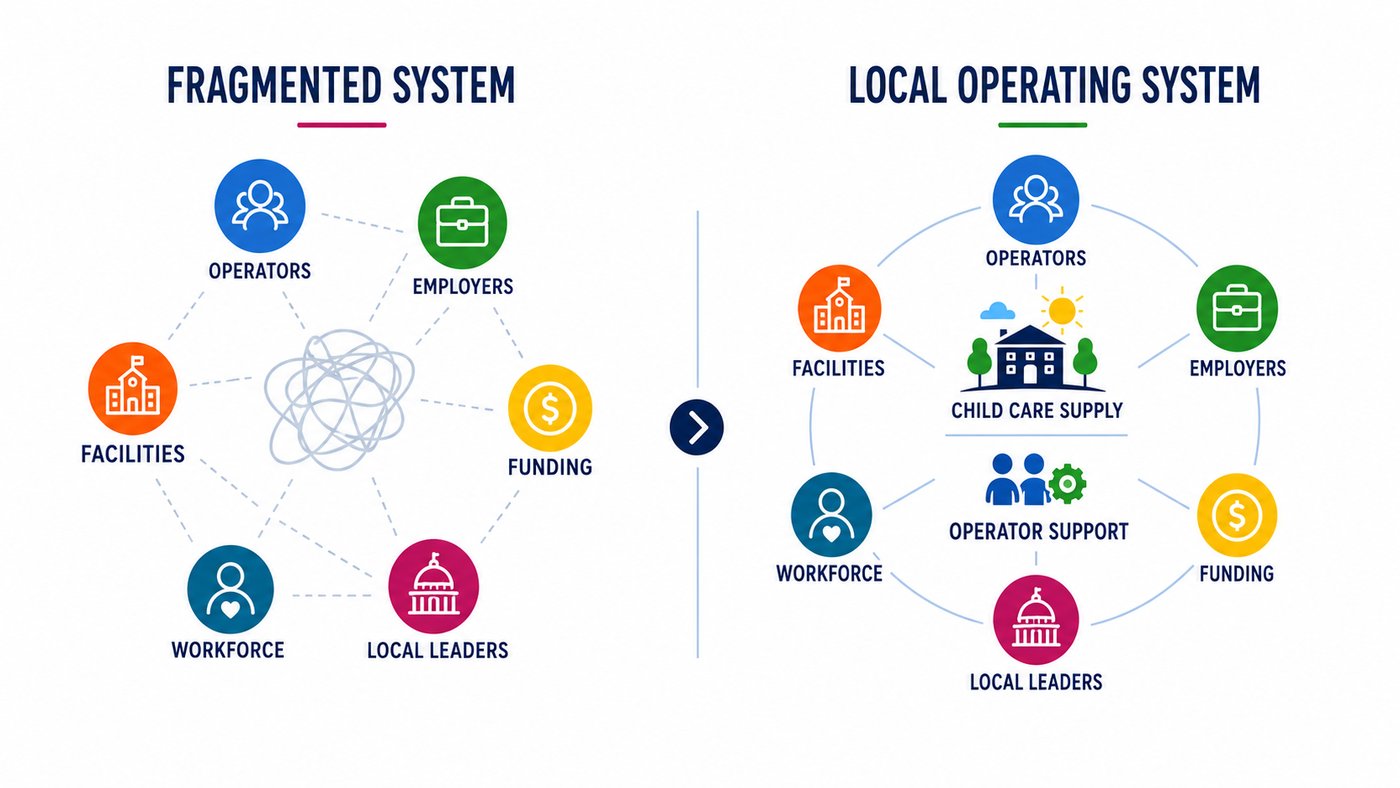
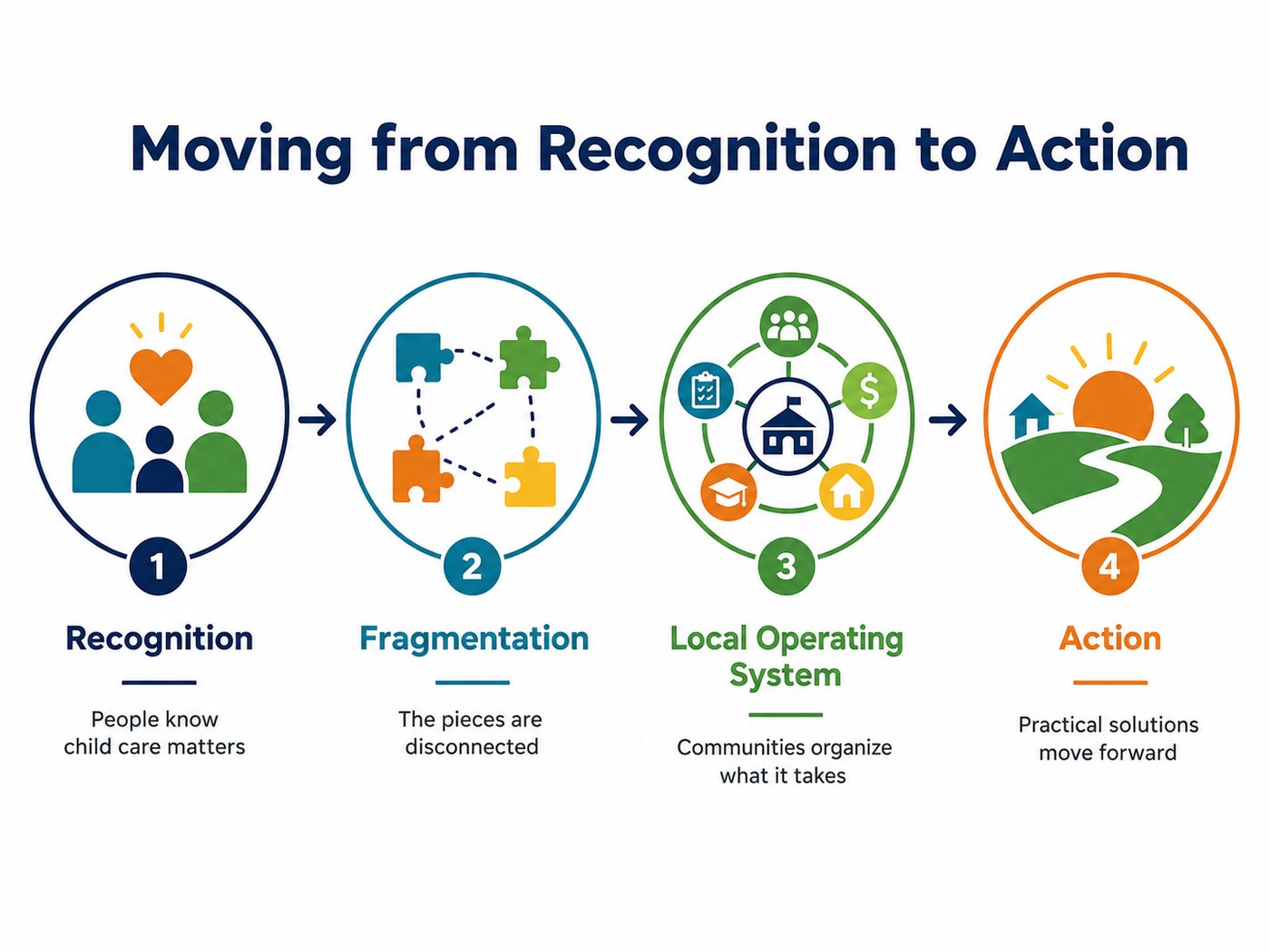
Communities can have activity without alignment, resources without a sequence, and concern without operating capacity. The problem is not a lack of concern — it is fragmentation around the supply side of child care.
From recognition to action
If fragmentation is the barrier, a local operating system is the next step. It helps a community connect the pieces required to create, support, and sustain child care supply. It does not replace child care operators — it supports them.
Child care supply cannot depend on one meeting, one grant, one provider, or one champion. Local supply needs an organized structure that can keep the work moving.


Operators first
Strong providers create the supply that supports families, employers, and communities. Everything else in the local system exists to support their ability to open, operate, and grow.
Framework
Create. Organize. Build. Sustain — a shared way of working that keeps operators, families, employers, and community partners moving in the same direction.
Establish shared understanding that child care supply is infrastructure and that operators are the foundation of local capacity.
Map current providers, partners, resources, facilities, funding, data, and local leadership already connected to child care.
Identify gaps and develop practical supply-side solutions that support operators, expand or stabilize capacity, and fit local market realities.
Keep the local child care system healthy through data, feedback, funding alignment, provider support, accountability, and continuous improvement.
National conversation
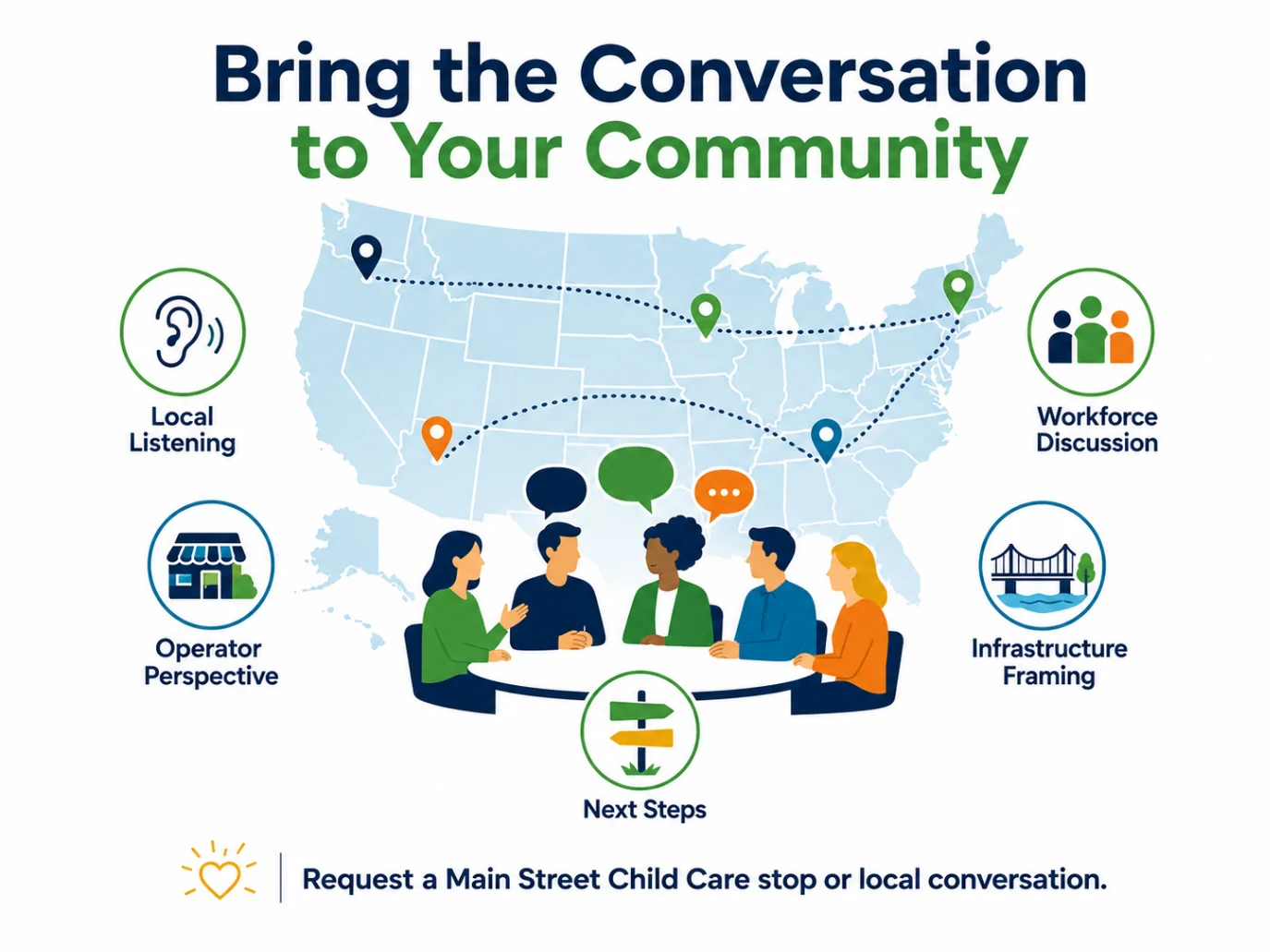
The National Main Street Child Care Conversation is an ongoing effort to listen, learn, and lift up how child care supply shapes families, employers, operators, and local economies across America.
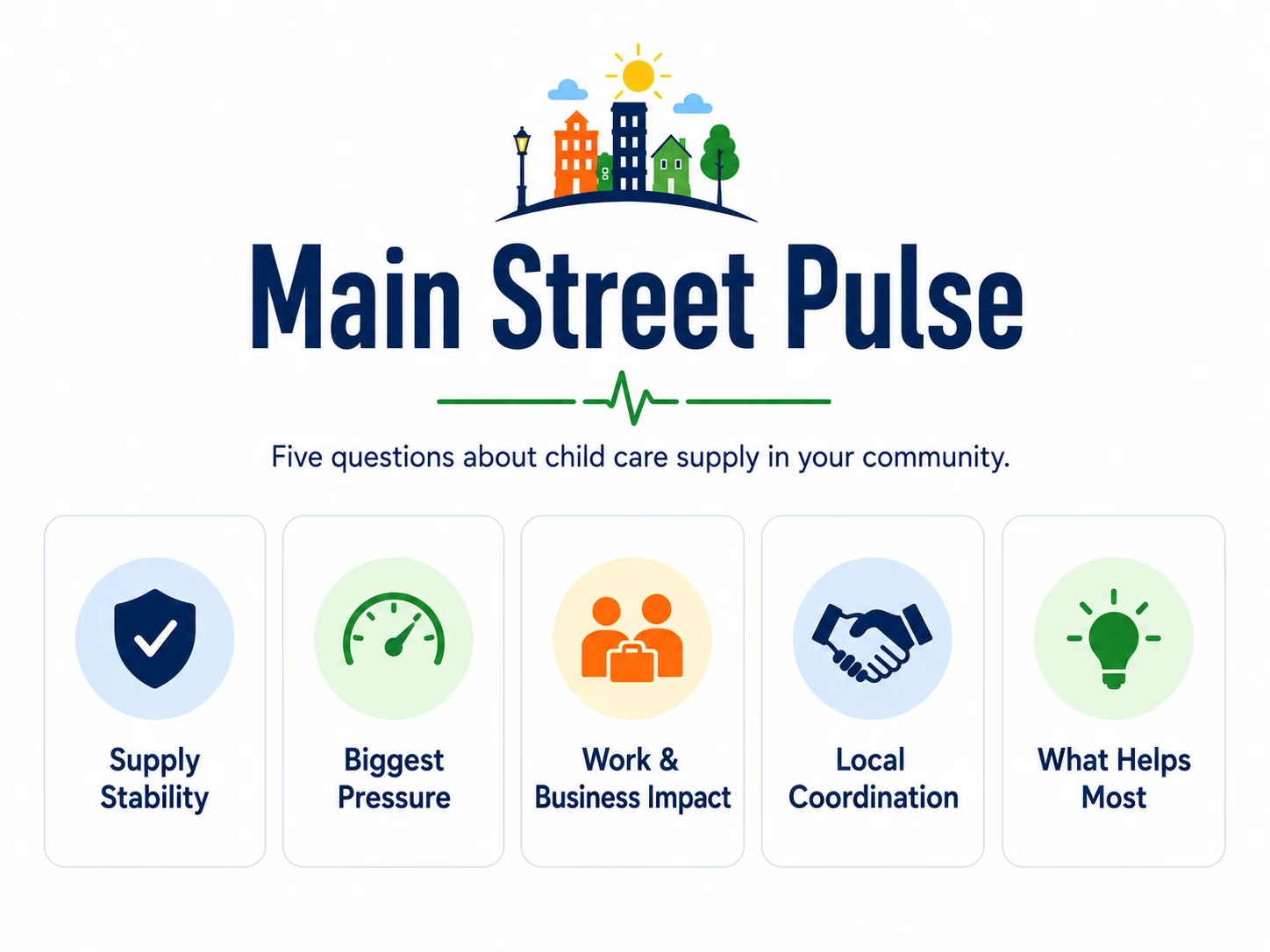
Main Street Pulse
Five questions to help surface local signals around operator stability, supply constraints, workforce pressure, employer impact, and community coordination.
Take the PulseWage realization
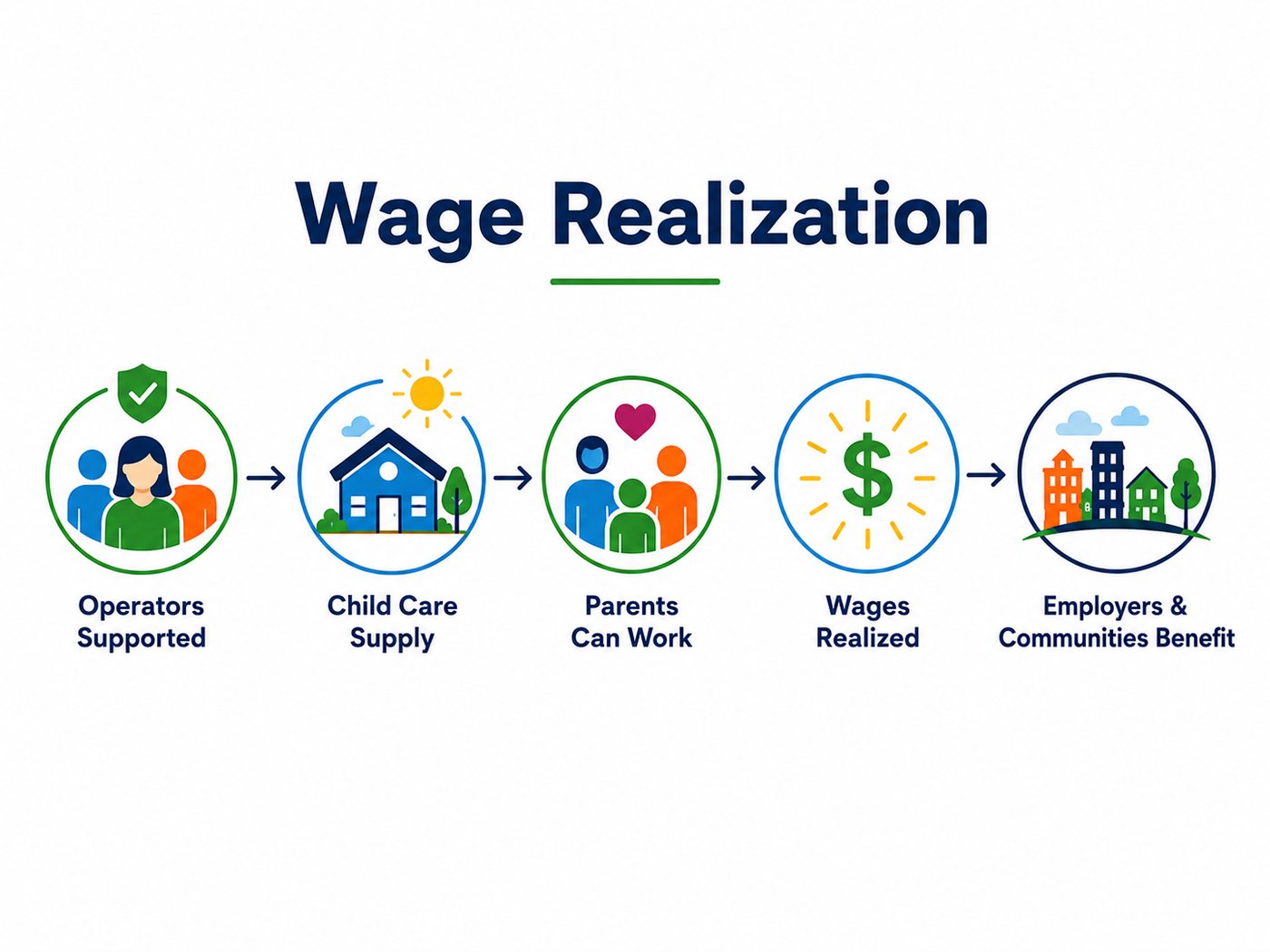
When child care is unavailable, parents may reduce hours, turn down opportunities, or leave the workforce. When child care supply works, wages are realized — and employers and communities benefit.
Find your path
Understand child care as infrastructure and begin organizing the local capacity needed to support supply.
Recognize providers as essential businesses at the center of local child care solutions.
Connect child care supply to workforce stability, retention, attendance, and productivity.
Support solutions that strengthen operators, working families, employers, and community vitality.
Five questions that put your community's child care reality on the national map.
Take the PulseSee how child care supply connects to Main Street infrastructure across the country.
ExploreConnect with us about what your community is seeing and how we can help.
Contact UsPowered by Business of Child Care
Main Street Child Care opens the public conversation. Business of Child Care helps communities move from conversation to planning, implementation, and operator support — providing the strategy, tools, training, and field experience that turn awareness into action.


Start the local conversation
Community leaders, operators, employers, funders, and civic partners — there is a role for you in building stronger child care infrastructure.